In the Orthodox tradition, an icon is not just a sacred image, but a spiritual window to the heavenly world. Before it, the believer offers his prayer with the hope that God's grace will be granted to him through it - by Christ Himself or through the intercession of the saint to whom the prayer is directed.
A special place in the life of Christians is occupied by icons of the Holy Mother of God. Over the centuries, believers have given various icons of the Mother of God special names, associated with the place where they are located, the manner of their appearance, or the miracles associated with them. Thus, each icon becomes a testimony to a specific history of faith and to God's presence in the lives of people.
A special veneration gradually forms around these holy images. Special services are composed in their honor, recalling the historical events associated with their appearance, as well as the miracles that occurred before them. Believers gather for liturgies and processions to express their gratitude and hope, and the places where miraculous icons are kept become important centers of worship.
This tradition is especially alive on Mount Athos and in many other Orthodox places of pilgrimage. There, icons do not remain just objects of veneration, but become part of the spiritual life of the Church. Generations of Christians pray before them, seek comfort and help, and leave their thanks for the mercy received.
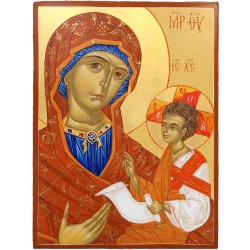
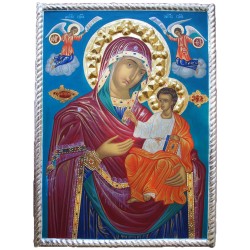
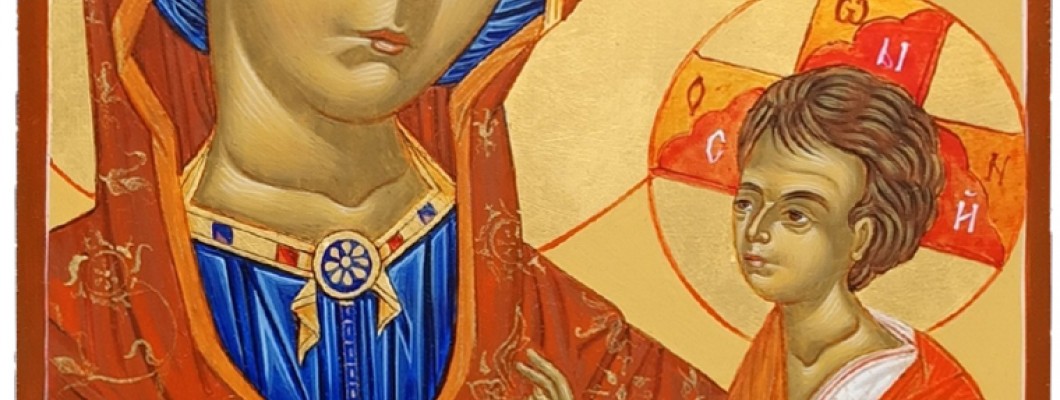
Among the numerous miraculous icons of Mount Athos, a special place is occupied by the image of the Most Holy Virgin "Hodegetria" ("The One who shows the Way"), which is today kept in the Xenophon Monastery. Its history is filled with mysterious events that have been passed down from generation to generation for centuries as a testimony to God's providence and the special protection of the Mother of God.
According to the Athonite tradition, the icon has been in the Vatopedi monastery since time immemorial. There it was placed in the cathedral church and was an object of veneration by the monks and pilgrims. But in 1730, something happened that no one could explain. With the doors locked, the holy image disappeared from the temple.
The Vatopedi monks began to search for the icon, assuming that it could be located somewhere within the monastery. However, soon they received news that amazed them - the holy image had been found in the Xenophontos Monastery, a considerable distance from Vatopedi. This was inexplicable to the monks, since no one had ever transported the icon from one place to another.
They sent their brothers to return the icon to Vatopedi. It was transported and placed back in its previous place in the cathedral church. But the story did not end there. Despite all the measures taken, the icon disappeared again and was discovered for the second time in the Xenophontos Monastery.
After it became clear that the holy image miraculously left Vatopedi and returned to Xenophon, the monks accepted what was happening as a sign of God's will. They resigned themselves to the mysterious providence, knowing that the Most Holy Virgin herself had chosen the place where it would reside. Since then, the icon has remained in the Xenophontos Monastery and was placed in the cathedral church - where even today pilgrims turn to her with prayers.
But the history of the Holy Icon "Hodegetria" is connected not only with its miraculous transfer. The Athos tradition also preserves a story about an event from the time of the Greek uprising, when a Turk tried to desecrate the holy image. According to eyewitnesses, he was immediately punished for his foolish act. For believers, this event became another testimony to the power of God's protection and the holy image.
The name "Hodegetria" ("The One who shows the Way"), acquires a particularly deep meaning precisely in the light of this story. The Most Holy Virgin is perceived as a Mother and an intercessor who directs a person to Christ and accompanies him on the path of faith. And the miraculous path of the icon itself from "Vatoped" to "Xenophontos" reminds the pilgrim that there are no closed doors for God and that His providence is often revealed in ways that human reason cannot explain.
Today, many pilgrims stand before the miraculous icon of the Holy Virgin "Hodegetria", bringing their anxieties, hopes and gratitude.
Veneration of the icon is inextricably bound to the faith in God. It is not the image itself that is the source of grace, but Christ, Who, by His mercy and through the prayers of the saints, reaches the human heart. The icon reminds us that heaven is not distant and inaccessible - it can be experienced in prayer, in the silence before the holy image, and in the hope with which one turns to God.
Related Products